White Pulp Mold Tray | Protective Packaging for Precision Components
Wrapping delicate components in a smooth finish.
Project Overview
A protective tray that balanced looks and function — in white, not the usual kraft tone. Packtoss delivered that with a wet-molded pulp process, smoothing the surface for a cleaner, more premium finish.
The Customer’s Challenge
- Sustainable, yes — but we still care how it looks.
- No marks or scuffs on the product’s surface.
- Even opening the box should feel a little premium.
Packtoss’s Proposal
A wet-molded pulp process smooths the surface for a consistent white finish, and rounded cavities cradle each part gently.
This design led to the following results.
- Balanced sustainability with a premium finish
- Better product protection from a smoother surface
- A more considered unboxing experience
Key Points of This Case
A Smooth Finish Through Wet Pulp Molding
A process that finishes the surface uniformly achieves a premium texture even in white.
Rounded Protective Shapes
The smooth, corner-free recess shape prevents scratches and marks on the components.
Applicable to Precision Equipment and Premium Products in General
This can be applied not only to electronic components but also to cushioning packaging for premium products in general where visual beauty is required.
Differences in Finish by Manufacturing Method
Even with the same white pulp mold, the texture of the front and back surfaces changes significantly depending on the drying method used during molding. Here we introduce the differences between four representative methods: “wet press,” “semi-wet,” “semi-dry,” and “dry press.”
Wet Press: The Smoothest, Most Premium Finish
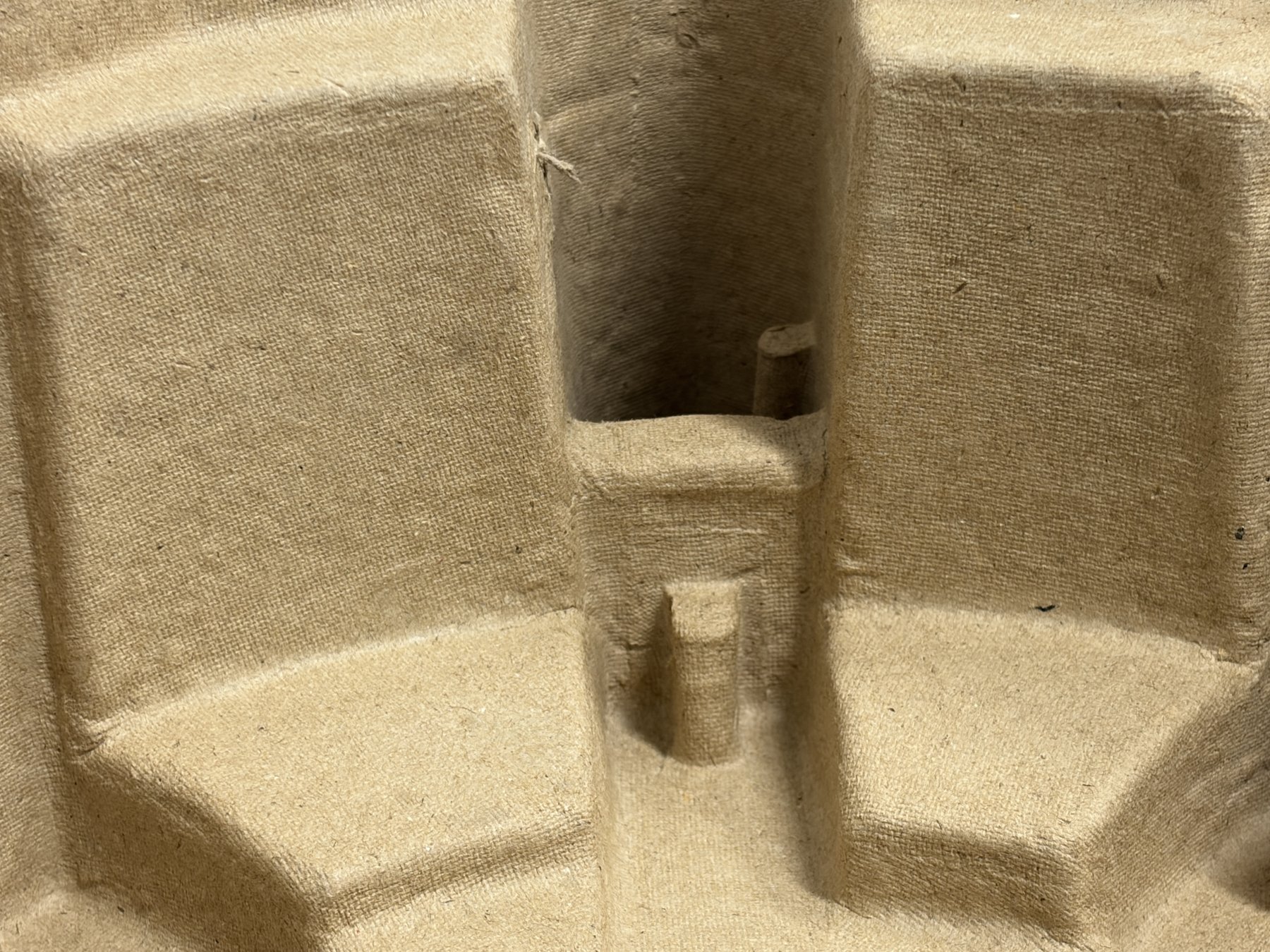
Wet press, which is molded by high-pressure pressing while still wet, results in a moist, smooth texture with finely compacted fibers on both the front and back surfaces. Embossed logos can also be reproduced sharply, making it ideal for brands that place importance on a premium feel when opening. Because drying requires extra effort, it is the most expensive of the four methods.
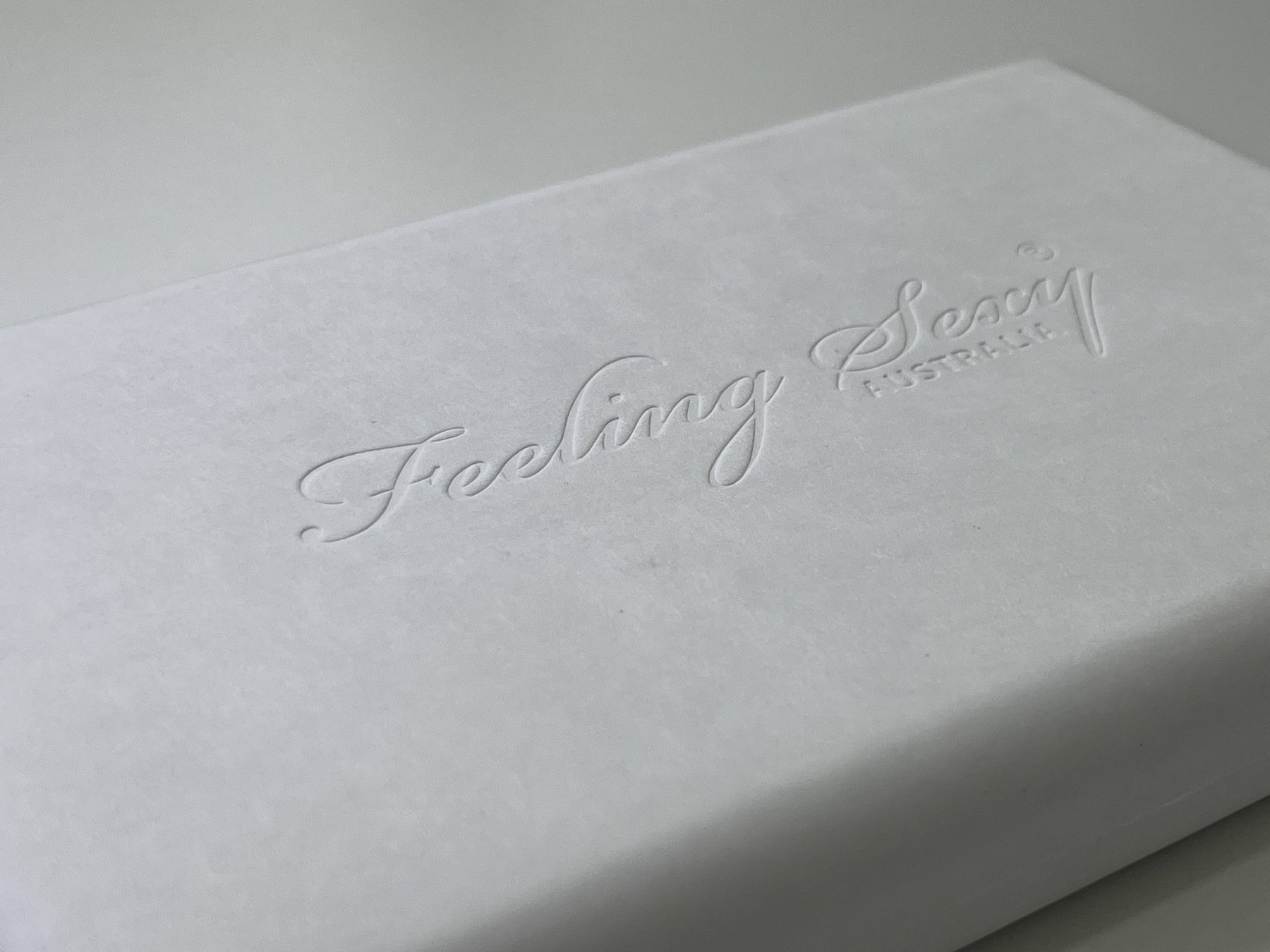
Semi-Wet: A Near-Wet Texture at a Lower Cost
Semi-wet is a method positioned between wet press and semi-dry. It uses virgin pulp to achieve a smooth surface close to that of wet press, while simplifying the drying process to keep costs down. It is widely adopted by customers who want a premium feel but cannot afford the budget of wet press.
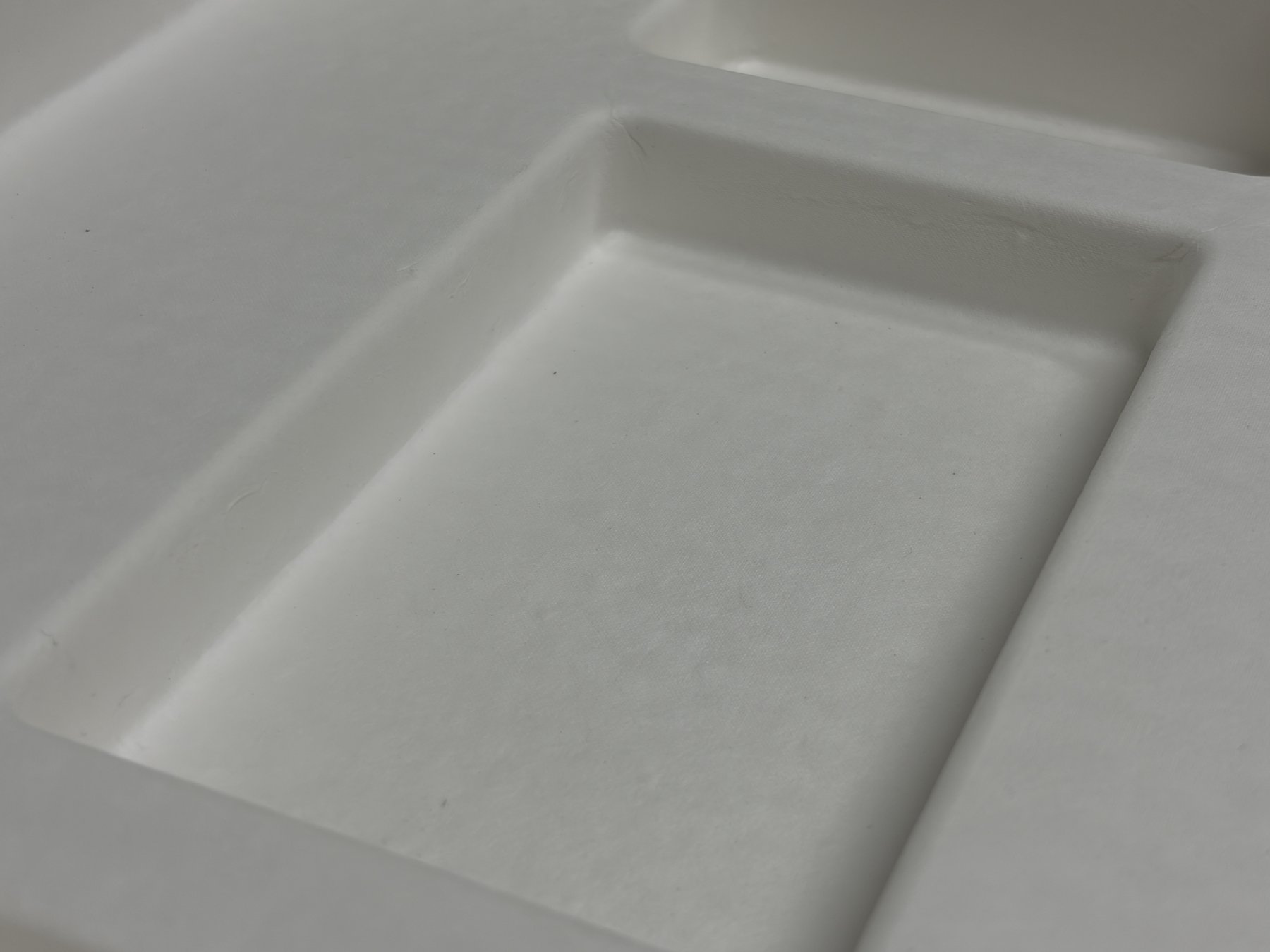
Semi-Dry: A Decent Finish Using Virgin Pulp
The front surface of semi-dry has a finish nearly equivalent to semi-wet. The photo shows the back surface: it does not have the coarse fiber texture or mesh marks seen in dry press using recycled waste paper, and instead achieves a relatively uniform texture unique to virgin pulp. This method suits customers who want to avoid the rugged texture characteristic of recycled waste paper while still keeping costs down.
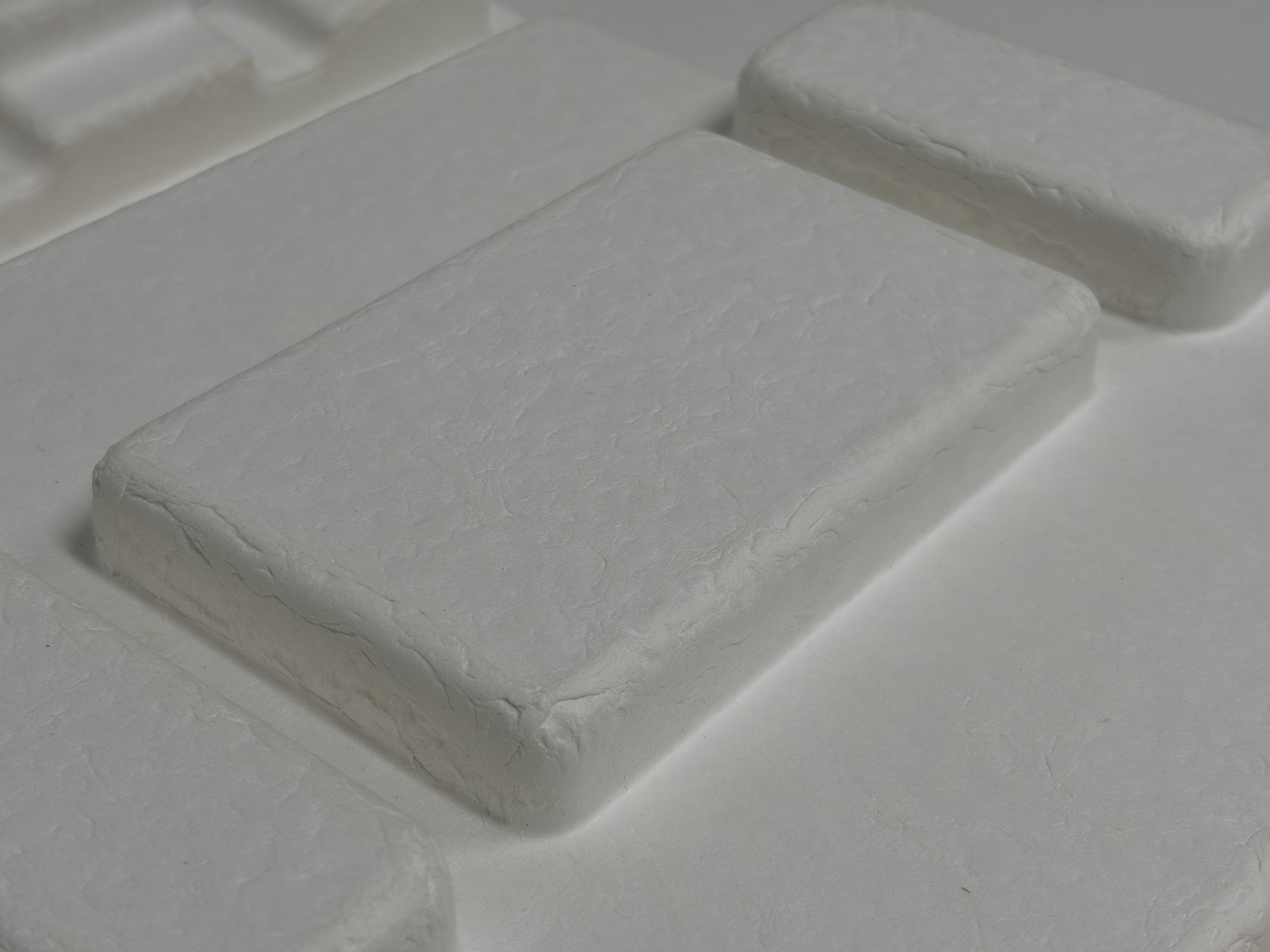
Dry Press: A Natural Texture from Recycled Waste Paper
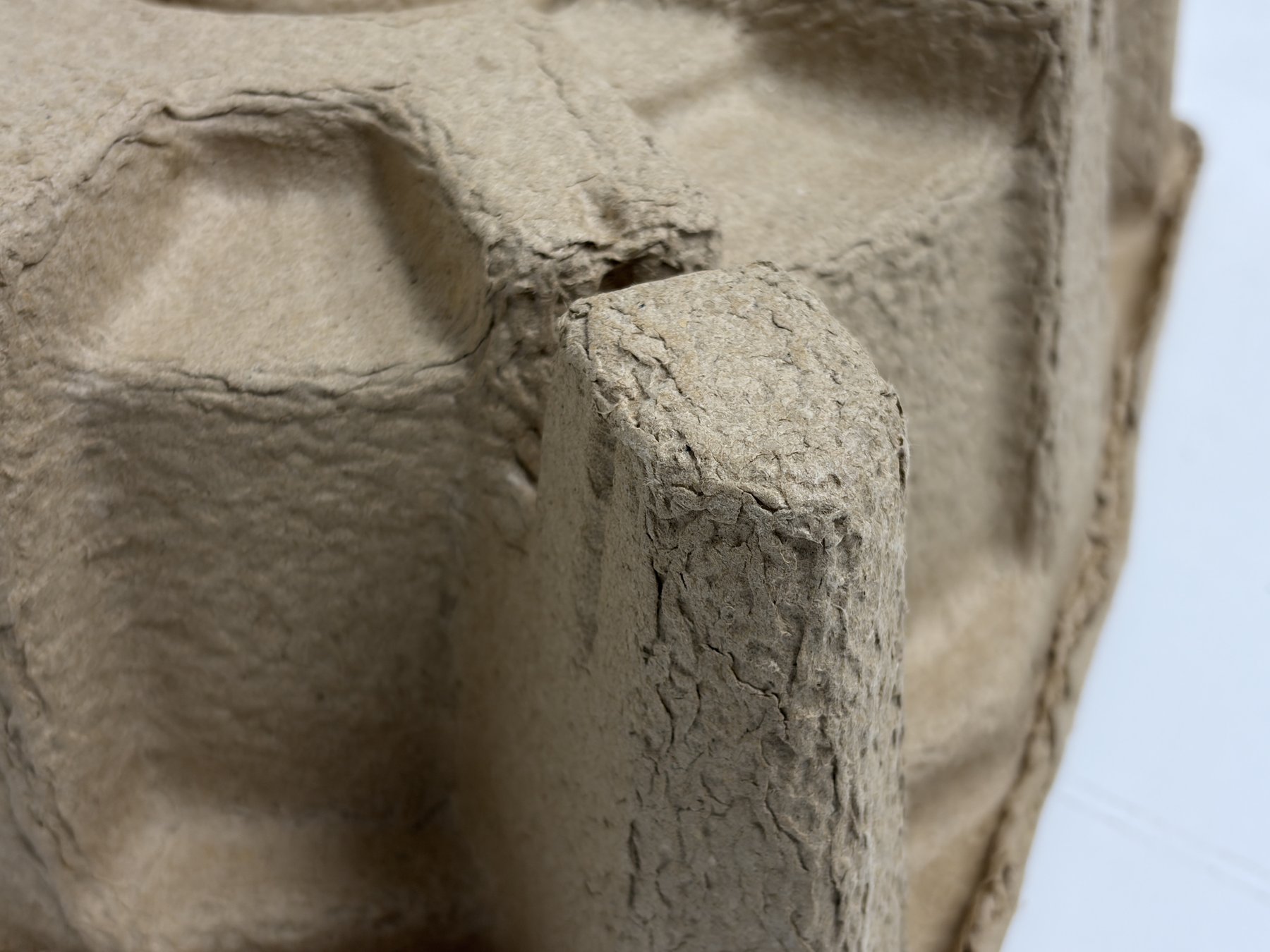
Dry press is made primarily from recycled waste paper, resulting in a natural, rugged texture with fiber unevenness remaining on the surface. The back surface is also characterized by mesh (wire mesh) marks left from the molding process. This method is recommended when cost is the top priority, or when you want to deliberately embrace the material’s natural texture for an eco-friendly package.
Method Comparison Table
| Method | Main Raw Material | Surface Texture | Cost Guide | Recommended For |
|---|---|---|---|---|
| Wet Press | Virgin Pulp | Very smooth (embossing possible) | High | Those seeking the utmost premium feel |
| Semi-Wet | Virgin Pulp | A smoothness close to wet | Medium to High | Those who value a balance of premium feel and cost |
| Semi-Dry | Virgin Pulp | White, reasonably smooth | Medium | Those who want to avoid a rugged texture while also keeping costs down |
| Dry Press | Recycled Waste Paper | A rugged, natural texture | Low | Those who want to prioritize cost and eco-appeal above all |
For customers who say “I want to avoid the rugged texture of recycled waste paper, but wet press is difficult on the budget,” we recommend semi-wet or semi-dry, which offer the best of both worlds. We propose the optimal method according to your budget and application, so please feel free to consult us.