Cushioning Material (Paper)
An Environmentally Conscious Cushioning Solution That Doesn’t Rely on Plastic.
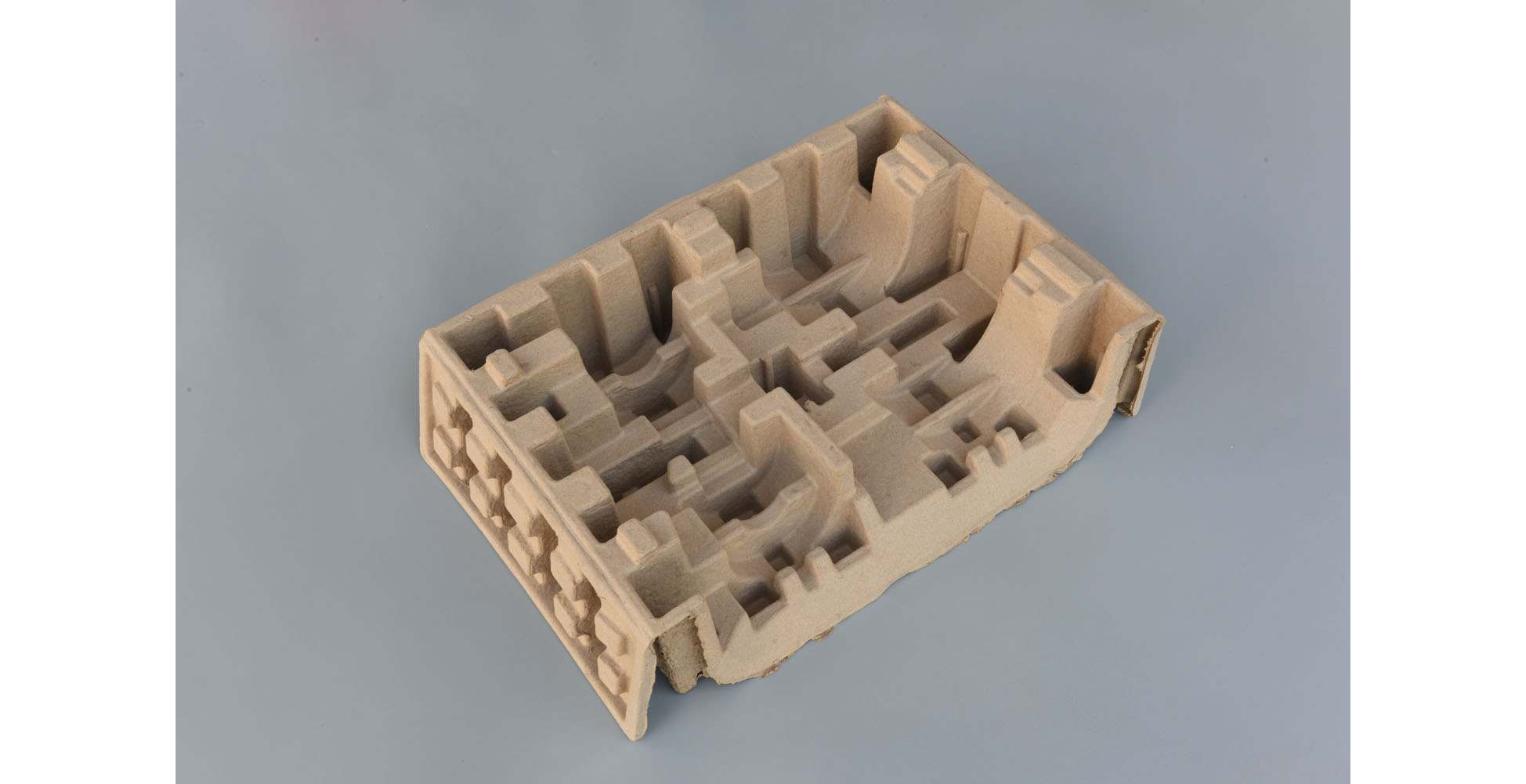
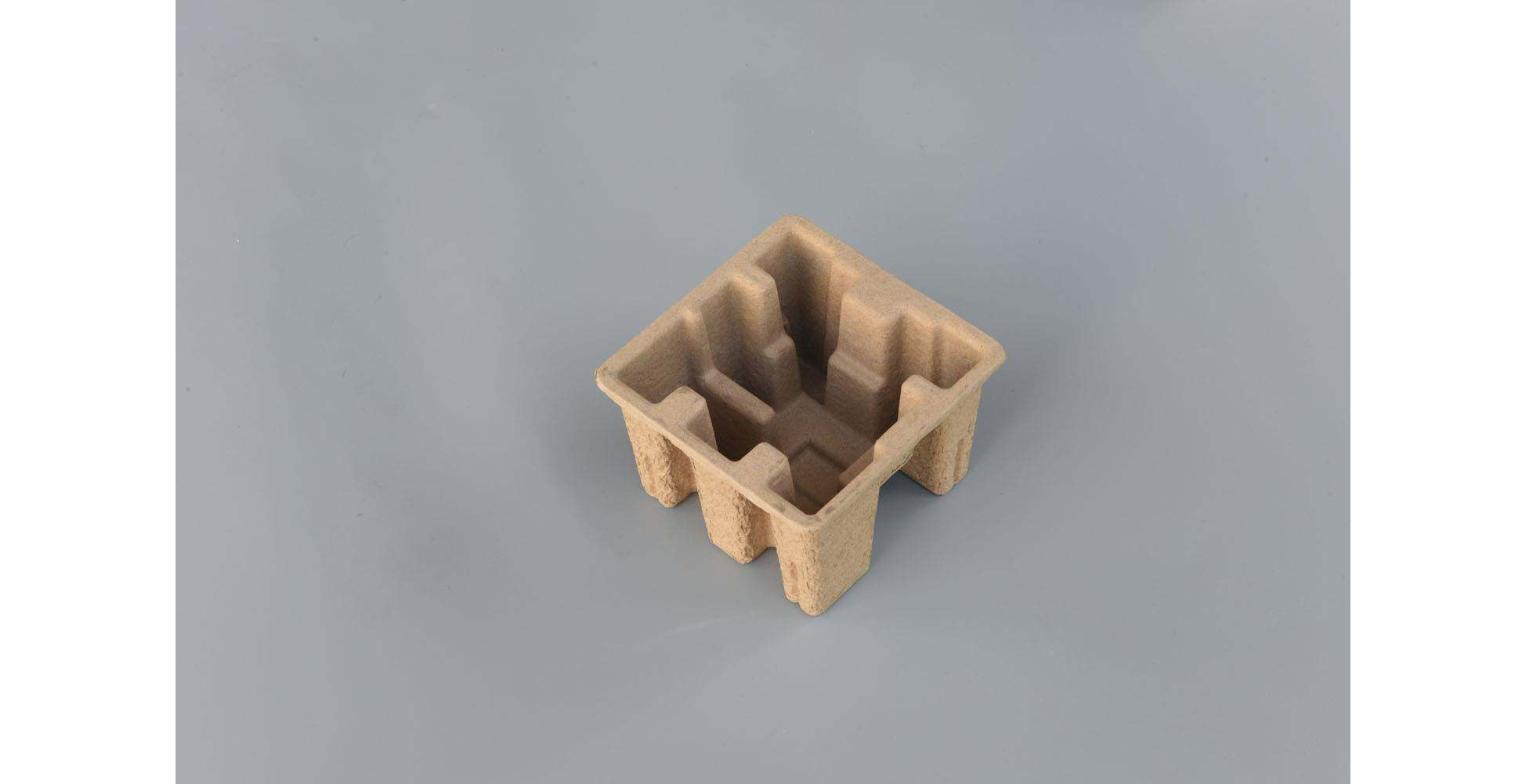
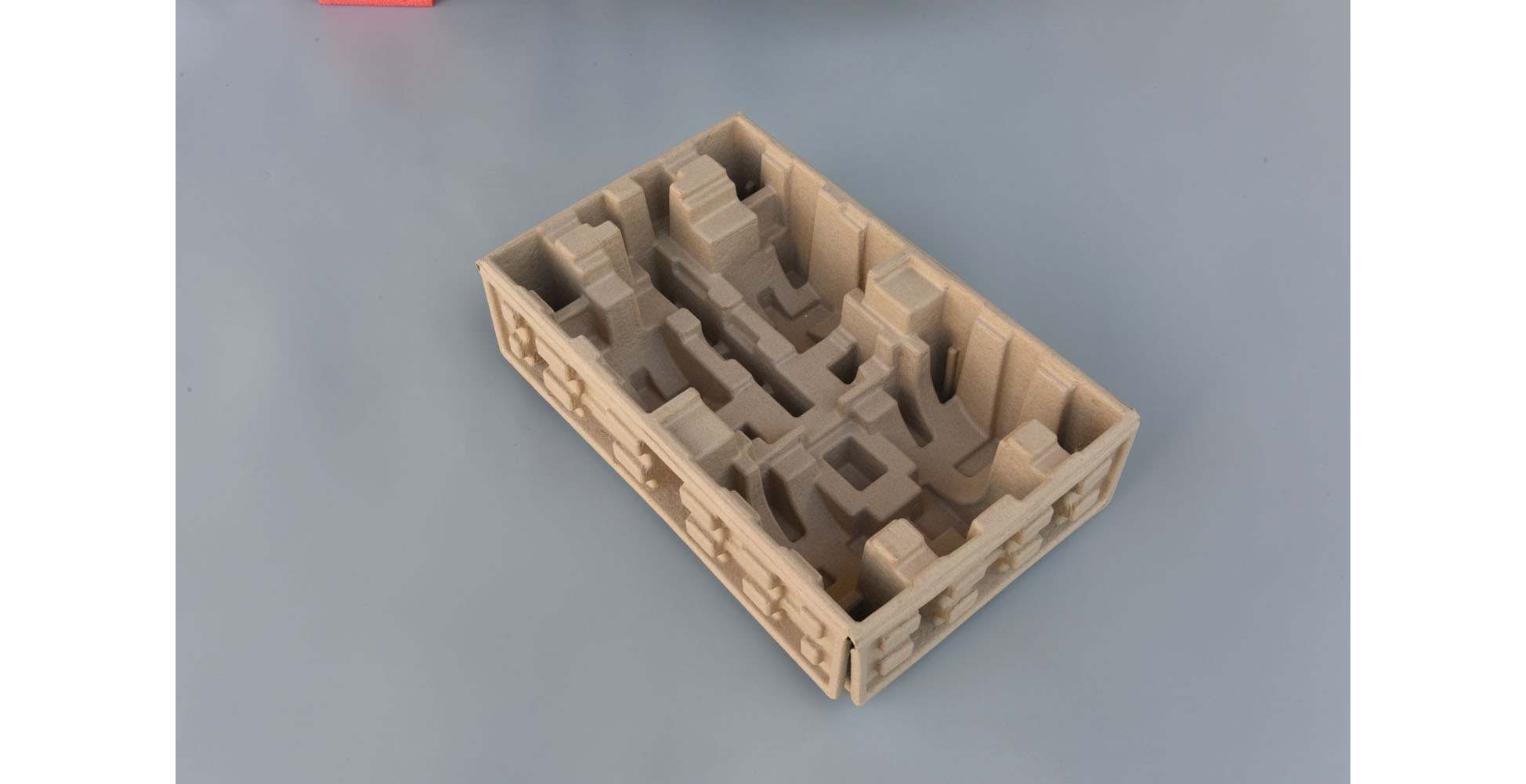
As the need to move away from plastic grows, paper-based cushioning materials have become an important choice for environmentally conscious packaging. With excellent cushioning and molding flexibility, paper-based materials balance product protection with sustainability. Since they are made primarily from plant-derived pulp, they are also easy to recycle and sort, offering a major appeal in reducing environmental impact after disposal.
Products Handled
- Molded pulp cushioning material (wet press / dry press)
- Corrugated paper cushioning material (die-cut processing)
- Lattice (grid-pattern) dividers
Molded Pulp Cushioning Material (Dry Press Molding)
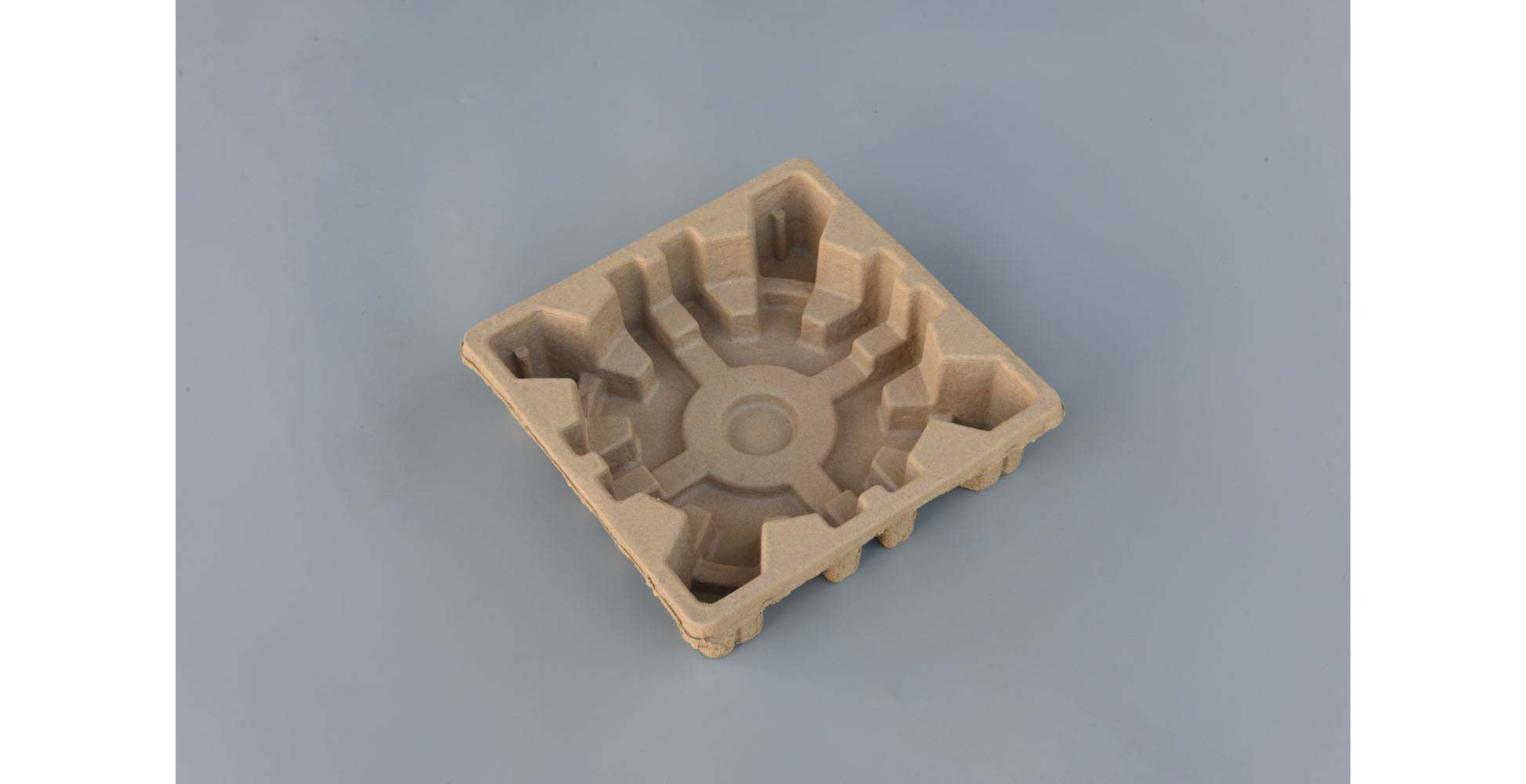
Molded cushioning material made through pulp molding is a paper-based cushioning material that can be custom-designed to match product shape. Among molding methods, dry press molding in particular offers a smoother surface and higher dimensional precision than the common wet method (wet press), and is characterized by its ability to create fine partition structures, as shown in the photo. It is increasingly adopted as tray-shaped cushioning for products such as precision equipment, cosmetics, and sundries that need to be held in individual, independent recesses for each part.
Corrugated Processing or Pulp Mold Forming — We Propose the Optimal Design from Scratch
Paper-based cushioning materials include a type assembled by die-cutting and processing corrugated board or various paperboards, and a type molded into a dedicated shape using pulp mold. Which is optimal depends on the product’s weight, shape, quantity, and cost. Rather than committing to a specific method, we propose the method best suited to your product from scratch, starting at the design stage. Through repeated prototyping and verification, we work together with you to create a paper package that balances cushioning performance, cost, and productivity.
Use in “Igeta” (Lattice) Packaging
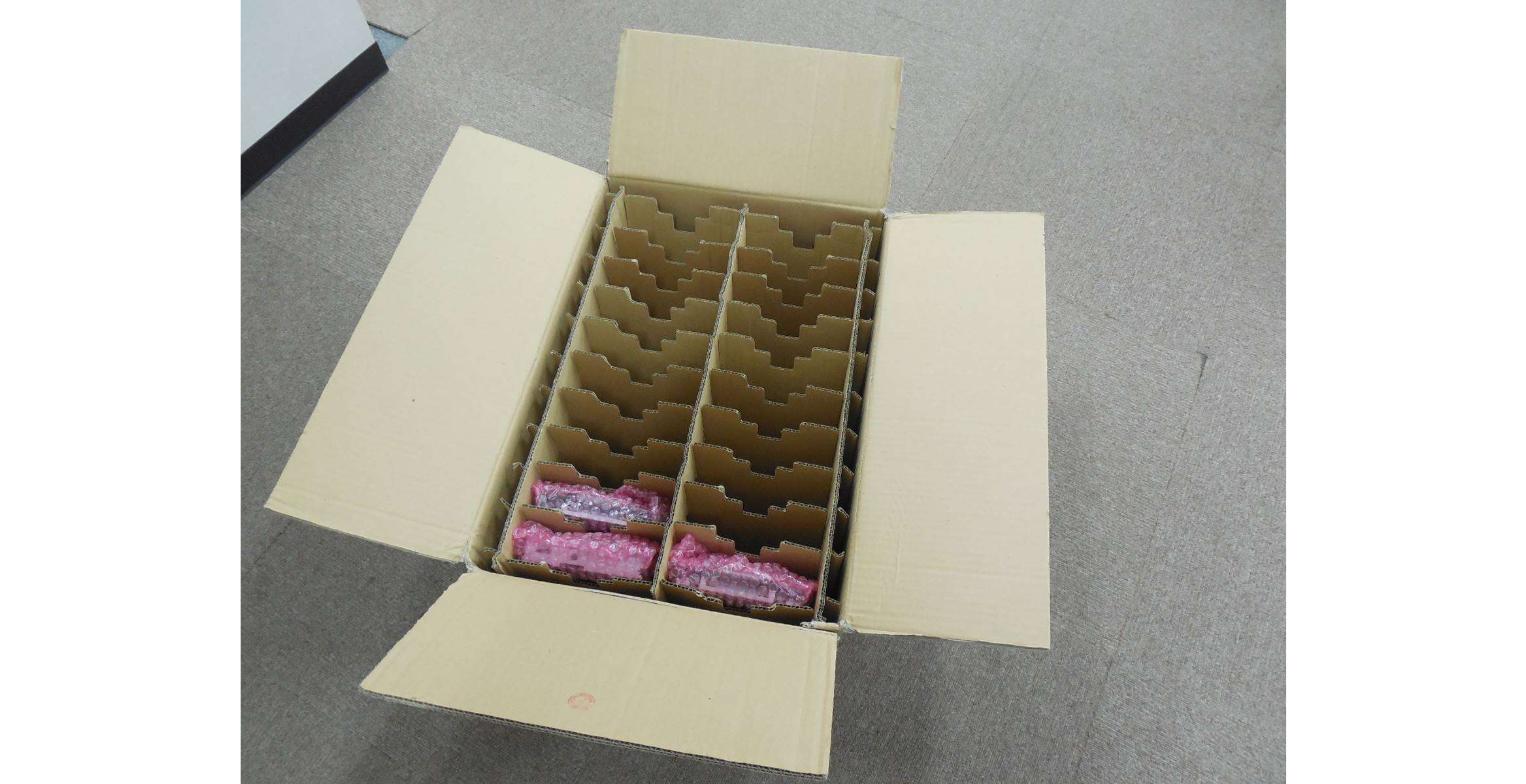
When transporting multiple long, thin products or bottle/tube-shaped products together, “igeta” packaging — dividers assembled in a lattice pattern — is effective. By assembling corrugated paper or molded pulp into a lattice and fitting it inside the box, each product is individually fixed in place, preventing contact and damage between products caused by vibration or shifting during transport. Because it balances cushioning with space efficiency, it is widely adopted for packing multiple beverage or cosmetics bottles or precision parts together.
Plastic-Free Packaging Design
For customers considering switching away from expanded polystyrene or bubble wrap, we propose paper cushioning materials that reduce environmental impact while maintaining functionality. Ease of recycling and sorting is also a major benefit.
Optimal Supply Leveraging Our Asian Procurement Network
Through collaboration between our three bases in Japan, Hong Kong, and Thailand and our group companies, we procure the optimal paper cushioning material from the optimal location based on cost, lead time, and transport environment. We provide consistent support from prototype sample arrangement through to mass-production supply.
Total Proposal Combined with Product Packaging
We coordinate everything together, from product packaging such as individual packaging boxes and outer cartons to cushioning materials used during transport. We also respond to requests to go plastic-free with the optimal paper cushioning design based on product weight, shape, and transport environment.